Understanding what’s actually happening to your equipment over winter makes the spring startup process make more sense, and it makes the case for annual servicing about as clearly as anything can.
Ottawa’s Storage Window Is Longer Than Most People Realise
That matters because almost every problem that shows up at the start of spring, from a lawn mower that won’t start to a carburetor that needs cleaning, is a function of time. Fuel degrades. Seals dry out. Moisture accumulates. Lubricants settle or separate. The longer the storage window, the more opportunity any of these processes has to create a problem that needs fixing before the equipment is usable again. Ottawa’s storage window is one of the longest in the country for a major urban centre, and that’s before accounting for the specific conditions that follow below.
Freeze-Thaw Cycles: The Most Underrated Equipment Risk
Here is what freeze-thaw cycling does to small engine equipment specifically:
Metal fasteners and fittings: Corrosion accelerates with moisture cycling. Bolts and fittings that were snug in the fall can be seized or corroded by spring, which complicates servicing significantly.
Road Salt: The Risk That Follows Equipment Inside
The practical takeaway: before storing equipment in the fall, rinse the exterior down and store it off the floor if possible. When pulling equipment out in spring, check all metal surfaces, connections, and contact points for visible corrosion before starting.
Condensation: The Invisible Moisture Problem
This is also part of why storing equipment with a full fuel tank, treated with stabilizer, is better practice than storing it nearly empty. A full tank leaves less air space for moisture to condense into. A half-empty tank is particularly problematic.
Ethanol Fuel: A Problem Everywhere, Worse Here
For a detailed look at how to diagnose and address stale fuel problems specifically, see our post on what to do when your lawn mower sat all winter with gas in it.
What to Do About It: The Short Version
- Run the fuel tank dry, or treat a full tank with fuel stabilizer and run the engine to circulate it
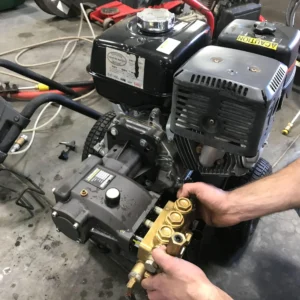
- Drain any water-holding equipment (pressure washers, irrigation pumps) completely
- Clean and rinse the exterior, particularly if the equipment has been used near salted surfaces
- Store equipment off the floor where possible, ideally on a shelf or mat
- For equipment with batteries, remove or connect to a trickle charger
- Check all rubber components, including primer bulbs, fuel lines, and O-rings, for cracking or hardening
- Drain old fuel and refill with fresh gasoline before attempting to start
- Replace the spark plug as a matter of routine rather than waiting for a failure
- Service the air filter
- For pressure washers, inspect the pump housing before connecting any water
How Legacy Small Engines Can Help
We also offer annual subscription plans starting at $175/year that include full seasonal service with pick-up and delivery. The equipment comes to us in fall and comes back ready to run in spring. For Ottawa homeowners who have dealt with the spring startup problem one too many times, it’s a straightforward solution. (Pricing may vary. Contact us for a free upfront estimate.)