
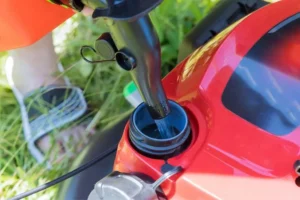
It’s April. You wheel the mower out of the garage, give the cord a pull, and nothing happens. You pull again. A sputter, maybe. Then nothing.
If your mower sat all winter with fuel still in the tank, there’s a very good chance old gas is the problem. It’s the single most common cause of spring no-starts in Ottawa, and it’s responsible for roughly half of all small engine carburetor work done at repair shops. The good news is that it’s a well-understood problem with straightforward solutions.
Here’s what’s happening inside your engine, how to tell if stale fuel is the culprit, and what your options are for getting the mower running again before the lawn gets away from you.
Why Gas Goes Bad Over Winter
Gasoline doesn’t last forever, and the fuel sitting in your mower’s tank right now may be closer to six or seven months old. Ottawa’s mowing season typically wraps up in October or November, which means by the time spring rolls around, that fuel has been sitting in a partially empty tank through an entire Canadian winter.
The chemistry is straightforward. Ethanol-blended gasoline, which is the standard fuel at virtually every pump in Ontario, begins to degrade within 30 days of being exposed to air. By the 60 to 90 day mark, E10 fuel has lost a meaningful portion of its combustibility. After five or six months, it can leave behind a sticky varnish-like residue that coats the inside of the carburetor, clogs the tiny fuel jets, and either prevents starting entirely or causes rough, unreliable running.
There’s a second problem specific to ethanol blends called phase separation. When E10 fuel sits for an extended period, the ethanol component absorbs moisture from the air and separates from the gasoline, sinking to the bottom of the tank. The water-ethanol mixture that results doesn’t burn well, and if it reaches the engine, it can cause erratic performance, lean-running conditions, and in some cases valve damage.
This isn’t a fringe problem. By one industry estimate, carburetor issues caused by stale fuel account for approximately 50 percent of all small engine repair shop revenue. It’s that common.

How to Tell If Stale Gas Is the Problem
Before pulling anything apart, run through this quick checklist. Most of the time, stale fuel is the obvious answer, but it’s worth ruling out a few other common culprits first.
Check the spark plug first. A fouled or failed spark plug can cause identical symptoms to a gummed carburetor. Pull the plug and look at it. If the electrode is black and sooty or corroded, replace it before doing anything else. Spark plugs cost under $10 and take five minutes to swap. If the mower fires up after a new plug, you’ve saved yourself a carburetor job.
Check the air filter. A completely blocked air filter starves the engine of oxygen and can prevent starting. Pull it out and hold it up to the light. If you can’t see light through it, replace it.
Check the fuel. If the plug and filter look fine, pull the fuel cap and take a look at what’s in the tank. Fresh gasoline is clear to light amber with a clean smell. Old, degraded fuel often looks darker, may have an orange or brownish tinge, and smells sour or varnish-like rather than the sharp smell of fresh gas. If anything looks or smells off, the fuel is the problem.
Try the spray test. With a fresh spark plug installed, remove the air filter and spray a short burst of carburetor cleaner directly into the carburetor throat, then pull the starter cord. If the engine fires briefly and then dies, it confirms the engine itself is fine and the fuel system is the issue.
Your Options, From Simplest to Most Involved
Once you’ve confirmed stale fuel is the problem, here’s how to approach it in order of complexity.
Option 1: Drain the Tank and Add Fresh Fuel
If the carburetor isn’t already gummed up and the mower was running fine at the end of last season, sometimes draining the old fuel and refilling with fresh gas is enough. Use a siphon pump or fuel line to remove as much of the old fuel as possible, then refill with fresh E10 or, better yet, ethanol-free fuel if you can source it. Add a fuel stabilizer to the fresh fuel while you’re at it.
This works best when the mower sat for a shorter period or the old fuel wasn’t too far gone. If the engine doesn’t start cleanly after a fresh fill, the carburetor has likely already been affected.
Option 2: Add a Fuel Treatment to the Tank
Products like Seafoam or STA-BIL are fuel treatments that can help dissolve light varnish deposits and recondition degraded fuel. Add the treatment per the product instructions, let it sit for 15 to 30 minutes, then attempt to start the mower.
This is a reasonable first step if you’re not sure how bad the fuel is. It won’t fix a badly gummed carburetor, but it can clear up mild deposits and is worth trying before moving to a full carburetor service.
Option 3: Professional Carburetor Cleaning or Rebuild
If the carburetor is already gummed from months of varnish buildup, a proper cleaning or rebuild is the reliable fix. A technician will disassemble the carburetor, clean all the passages and jets with solvent, inspect the components, and reassemble with new gaskets. If the corrosion is too extensive, a replacement carburetor is often the better call and is generally still a cost-effective repair.
The cost of a professional carburetor service depends on the extent of the buildup, the mower’s make and model, and whether any components need to be replaced. What’s consistent is that it’s almost always significantly less than the cost of a new machine. (Contact Legacy Small Engines for a free upfront estimate before any work begins.)
What to Check While You’re at It
If the mower is already at the shop for a carburetor service, it’s a good time to take care of the rest of the spring maintenance at the same time. These items are all inexpensive and collectively make a significant difference in how the mower performs and how long it lasts.
- Oil change: Old oil from last season should be drained and replaced. Running degraded oil shortens engine life.
- Spark plug: Replace it regardless, even if it looks okay. They’re cheap and the peace of mind is worth it.
- Air filter: Replace if it’s been a season or two, or if it’s visibly clogged.
- Blade sharpening: Dull blades tear rather than cut, which stresses the engine and damages the lawn. End of winter is the right time to sharpen.
- Deck cleaning: Grass buildup underneath the deck restricts airflow and accelerates corrosion.
Doing all of this at once is essentially a full spring tune-up, and it’s the most cost-effective way to get ahead of the season rather than react to problems as they come up.

How to Prevent This Next Fall
The fix for stale fuel is simple and takes about five minutes at the end of the mowing season.
Option A: Run the tank dry. After the last mow of the season, run the mower until it stalls from lack of fuel. This leaves almost nothing in the carburetor or fuel lines to degrade over winter. It’s the cleanest approach and costs nothing. The caveat is that while it helps prevent old gasoline from clogging the carburetor, it can cause fuel pump damage due to overheating, and increase the risk of internal corrosion from condensation.
Option B: Add fuel stabilizer before storage. If you prefer to store the mower with fuel in the tank, add a fuel stabilizer to a full tank of fresh gas before shutting it down for the season. Run the engine for a few minutes to circulate the treated fuel through the system. A properly stabilized fuel can remain usable for up to a year.
Option C: Use ethanol-free fuel. Ethanol-free gasoline is available at some marinas and specialty fuel retailers and degrades significantly more slowly than E10. It’s more expensive per liter, but the longer shelf life and reduced varnish risk make it worth considering for equipment that sits for extended periods.
Of these, running the tank dry before storage is the simplest and most common solution for most homeowners, but not without risk. Ask your trusted small engine repair provider their opinion.
How Legacy Small Engines Handles Spring Carburetor Work
At Legacy Small Engines in Stittsville, carburetor issues from winter storage are the most common job we see every April and May. We diagnose the fuel system properly before doing any work, give you an honest assessment of what’s needed, and provide a clear upfront estimate before anything is touched.
We service all major brands, including Honda, Husqvarna, Toro, Briggs & Stratton, Kohler, Craftsman, and more. Whether it’s a carburetor clean, a full spring tune-up, or both, the work gets done right and the mower comes back running the way it should.
We also offer an annual lawn mower service subscription starting at $175/year. Subscription service includes a full spring tune-up with pick-up and delivery, so the mower leaves your garage in the fall and comes back ready to run in the spring. It’s the easiest way to make sure this never happens again. (Pricing may vary. Contact us for a free upfront estimate.)
Frequently Asked Questions
How long can gas sit in a lawn mower before it goes bad?
Ethanol-blended fuel (E10, which is standard at Ontario pumps) starts to degrade within 30 days and can cause carburetor problems after 60 to 90 days. After five to seven months over an Ottawa winter, old fuel is almost always a contributing factor in spring no-start issues.
Can I just add fresh gas on top of the old fuel?
For mild cases where the fuel isn’t too far gone, diluting old gas with fresh fuel sometimes helps. But if the carburetor has already been affected by varnish deposits, fresh gas alone won’t dissolve the buildup. A proper carburetor cleaning is the reliable fix at that point.
What does a gummed carburetor look and smell like?
You likely won’t see it without disassembly, but the signs are a mower that cranks but won’t fire, starts briefly then dies, or runs rough and surges. If the old fuel in the tank smells sour or looks darker than usual, the carburetor has almost certainly been affected.
Is carburetor cleaning something I can do myself?
It’s a DIY-able job for someone comfortable with small engine work, but it requires partial disassembly of the carburetor, proper cleaning solvents, and reassembly with new gaskets. Doing it incorrectly can make the problem worse. For most homeowners, a professional service is the better call, especially given the relatively low cost compared to the risk of further damage.
How much does carburetor cleaning cost for a lawn mower in Ottawa?
The cost depends on the mower’s make and model, the extent of the buildup, and whether any parts need to be replaced. Getting a free upfront estimate before any work begins is the best way to know exactly what you’re looking at. (Contact Legacy Small Engines for a free upfront estimate.)
Does using fuel stabilizer actually work?
Yes, when used correctly. Fuel stabilizer added to fresh gasoline before winter storage prevents the chemical breakdown that leads to varnish deposits. It needs to be added to fresh fuel before storage, not to fuel that has already degraded. Running the engine for a few minutes after adding the stabilizer ensures it circulates through the fuel system.
Don’t Let a Dirty Carburetor Steal the First Warm Weekend of the Season
Spring in Ottawa moves fast. Once the grass starts growing, it doesn’t wait. If your mower isn’t running by late April, you’re already behind.
Here’s how to get it sorted quickly:
1. Book a pick-up. We offer flat-rate pick-up and delivery across our service area, covering Stittsville, Kanata, Nepean, Richmond, and surrounding areas. You don’t need a truck. Check the pricing page for pick-up rates.
2. Choose your service. A one-off carburetor service if this is a single-season issue, or an annual subscription plan starting at $175/year if you want this taken care of every season without thinking about it. Subscription customers get 10% off parts and accessories on top of that.
3. Book in minutes. Call 613-899-4809 or fill out the form on the Legacy Small Engines contact page. Let us know the mower’s make and model, what it’s doing, and a convenient pick-up time.
Most spring tune-ups and carburetor jobs are turned around within 24 to 48 hours. During the May and June peak, allow a little extra time. We’ll give you an honest timeline upfront so you can plan your first mow accordingly.