How Ottawa’s Spring Affects Your Small Engine Equipment (And What to Do About It)

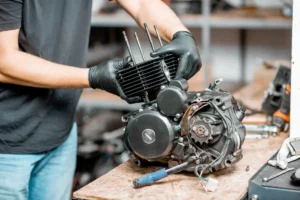
Small Engine being repaired at Legacy SMall Engines

Most small engine problems don’t happen suddenly. They develop quietly over five or six months of sitting in an unheated garage, building up until the first warm April morning when you pull the cord and nothing happens.

Ottawa’s climate is particularly hard on small engine equipment, and not just because of the cold. It’s the combination of a long storage window, active freeze-thaw cycling in March and April, road salt contamination that migrates further than most homeowners expect, condensation from temperature swings, and ethanol fuel that has months to degrade before the equipment is needed again. None of these factors is unique to Ottawa, but few Canadian cities stack them all together quite the way the Ottawa Valley does.

Understanding what’s actually happening to your equipment over winter makes the spring startup process make more sense, and it makes the case for annual servicing about as clearly as anything can.

Ottawa’s Storage Window Is Longer Than Most People Realise

Ottawa’s average last spring frost falls around early May, and the first fall frost typically arrives around the first week of October. That means the mowing season in Ottawa runs roughly five months, and the storage season runs the other seven.

In practice, most homeowners put their mowers and outdoor power equipment away in late October or early November, and don’t pull them back out until late April or early May. That’s a storage window of five to six months at minimum, and in a cold year, closer to seven.

That matters because almost every problem that shows up at the start of spring, from a lawn mower that won’t start to a carburetor that needs cleaning, is a function of time. Fuel degrades. Seals dry out. Moisture accumulates. Lubricants settle or separate. The longer the storage window, the more opportunity any of these processes has to create a problem that needs fixing before the equipment is usable again. Ottawa’s storage window is one of the longest in the country for a major urban centre, and that’s before accounting for the specific conditions that follow below.


Freeze-Thaw Cycles: The Most Underrated Equipment Risk

Most homeowners understand that deep cold is hard on equipment. What’s less appreciated is that the freeze-thaw cycling that dominates Ottawa’s March and April is, in some ways, harder on small engine components than sustained cold.

The City of Ottawa has documented increased freeze-thaw damage to infrastructure as one of the primary climate impacts facing the region. These are the same conditions that buckle roads, crack concrete, and split pipe fittings, and they apply to the rubber seals, plastic housings, fuel lines, and pump components in your outdoor power equipment as well.

Here is what freeze-thaw cycling does to small engine equipment specifically:

Rubber components: Carburetor gaskets, primer bulbs, fuel line hoses, and O-rings are all made of rubber or synthetic rubber compounds that expand and contract with temperature. Repeated cycling hardens them, causes micro-cracking, and eventually leads to fuel leaks, air leaks, and failed primer systems. A primer bulb that was soft and pliable in October may be cracked and non-functional by April.

Pump seals and valves: For pressure washers and similar equipment that holds water internally, freeze-thaw cycling is the direct cause of the cracked pump housings and failed seals that show up every spring. Water that wasn’t properly drained before storage freezes, expands, and cracks whatever is holding it. The damage is invisible from the outside until water starts flowing under pressure.

Plastic fuel tanks and housings: Plastic becomes brittle with age and cold. Repeated freeze-thaw cycling accelerates that process. Hairline cracks in fuel tanks are a common spring finding, particularly on older equipment.

Metal fasteners and fittings: Corrosion accelerates with moisture cycling. Bolts and fittings that were snug in the fall can be seized or corroded by spring, which complicates servicing significantly.


Road Salt: The Risk That Follows Equipment Inside

Ottawa’s roads are heavily salted through a long winter season, and the salt doesn’t stay on the roads. It gets carried on boots, tracked into garages, and suspended in the fine mist that comes off vehicle tires during wet thaws. By the time spring arrives, most Ottawa garages have a meaningful concentration of salt residue on their floors, and any equipment stored at floor level has been sitting in that environment for months.

Salt accelerates corrosion on metal components, wicks moisture into areas that should stay dry, and can damage electrical contacts and connections on equipment that has them. It’s a slow process, but over several seasons of storage without cleaning, salt accumulation contributes meaningfully to the kind of corrosion that shortens equipment lifespan.

The practical takeaway: before storing equipment in the fall, rinse the exterior down and store it off the floor if possible. When pulling equipment out in spring, check all metal surfaces, connections, and contact points for visible corrosion before starting.


Condensation: The Invisible Moisture Problem

Temperature swings in an unheated garage produce condensation on metal surfaces and inside enclosed spaces, including fuel tanks, carburetor bowls, and engine housings. Every time the garage temperature drops below the dew point, moisture condenses on every cold metal surface.

Over the course of a long Ottawa winter, this condensation cycles repeatedly. Moisture that forms inside a fuel tank mixes with the gasoline. Moisture that forms in a carburetor bowl promotes the varnish deposits that stale ethanol fuel leaves behind. Moisture inside an engine housing promotes rust on cylinder walls and valve components, which is one of the reasons a mower that sat over winter sometimes feels stiffer and harder to pull-start than one that was used recently.

This is also part of why storing equipment with a full fuel tank, treated with stabilizer, is better practice than storing it nearly empty. A full tank leaves less air space for moisture to condense into. A half-empty tank is particularly problematic.


Ethanol Fuel: A Problem Everywhere, Worse Here

E10 ethanol-blended gasoline is the standard at Ontario pumps, and it degrades within 30 days of being exposed to air. The varnish deposits it leaves in carburetors and fuel passages are the leading cause of spring no-starts for all small engine equipment, from lawn mowers to pressure washers to generators.

Ottawa’s long storage window makes this problem more pronounced here than in regions with shorter winters. A machine stored from late October to late April has been sitting on old, degraded fuel for approximately six months. That’s not marginal degradation. The fuel in the carburetor bowl has had six months to evaporate, concentrate, and leave a varnish residue on every passage it touched.

The cumulative effect compounds with the moisture and condensation issues described above. Degraded ethanol fuel plus condensation moisture creates a more aggressive corrosive environment inside the carburetor than either would produce alone.

For a detailed look at how to diagnose and address stale fuel problems specifically, see our post on what to do when your lawn mower sat all winter with gas in it.
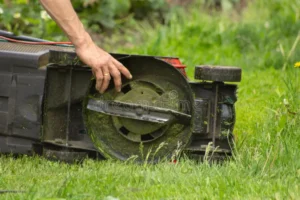

Checking a mower at Legacy Small Engines

What to Do About It: The Short Version

If you want to avoid the spring rush and the frustration of equipment that won’t start, there are two approaches that address all of the factors above.

Before storage in fall:
  • Run the fuel tank dry, or treat a full tank with fuel stabilizer and run the engine to circulate it
  • Drain any water-holding equipment (pressure washers, irrigation pumps) completely
  • Clean and rinse the exterior, particularly if the equipment has been used near salted surfaces
  • Store equipment off the floor where possible, ideally on a shelf or mat
  • For equipment with batteries, remove or connect to a trickle charger

Before the first use in spring:
  • Check all rubber components, including primer bulbs, fuel lines, and O-rings, for cracking or hardening
  • Drain old fuel and refill with fresh gasoline before attempting to start
  • Replace the spark plug as a matter of routine rather than waiting for a failure
  • Service the air filter
  • For pressure washers, inspect the pump housing before connecting any water

The full step-by-step process for walk-behind mowers specifically is covered in our spring tune-up guide for Ottawa homeowners.

How Legacy Small Engines Can Help

At Legacy Small Engines in Stittsville, we see the effects of Ottawa’s climate on small engine equipment every single spring. The carburetor jobs, the cracked pump housings, the seized starters, and the corroded spark plugs are all predictable and, in most cases, preventable.

We service all major brands of outdoor power equipment including Honda, Husqvarna, Ariens, Toro, Stihl, Briggs & Stratton, Kohler, Craftsman, and more, covering everything from lawn mowers and trimmers to generators, pressure washers, and chainsaws.

If your equipment didn’t get properly prepared for storage last fall, a professional spring service is the most efficient way to address all of the factors above in a single visit, with a clear diagnosis, an honest assessment of the machine’s condition, and an upfront estimate before any work begins.

We also offer annual subscription plans starting at $175/year that include full seasonal service with pick-up and delivery. The equipment comes to us in fall and comes back ready to run in spring. For Ottawa homeowners who have dealt with the spring startup problem one too many times, it’s a straightforward solution. (Pricing may vary. Contact us for a free upfront estimate.)
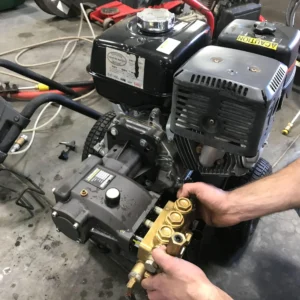

Engine repair at Legacy Small Engines


Frequently Asked Questions

Why does my lawn mower always seem to have problems in spring but not fall?

Because fall is when the equipment is last used and put away, while spring is when the cumulative effects of a long Ottawa winter reveal themselves. Five to six months of stale fuel, freeze-thaw cycling, condensation, and rubber component degradation add up quietly. The spring startup is the first time those effects are tested.

How many freeze-thaw cycles does Ottawa experience in a typical winter?

Ottawa experiences significant freeze-thaw cycling, particularly in the transition months of March and April. The City of Ottawa’s own climate projections identify increased winter freeze-thaw as one of the primary documented climate impacts on the region’s infrastructure, with freeze events projected to increase further over time. For small engine equipment stored in unheated garages, every one of those cycles stresses seals, rubber components, and any water remaining in pumps or hoses.

Does keeping equipment in a heated garage make a difference?

Yes, meaningfully. A heated garage eliminates freeze-thaw cycling on the equipment, prevents condensation from large temperature swings, and reduces the rate at which rubber components harden and crack. If heated storage isn’t practical, an insulated garage or even a well-sealed shed reduces the severity of all the factors described in this post.

Should I use ethanol-free fuel in my small engine equipment?

Ethanol-free gasoline degrades significantly more slowly than E10 fuel and does not cause phase separation. For equipment that sits through long Ottawa storage seasons, it is a better choice if you can source it. It is typically available at marinas and some specialty fuel retailers. The cost per liter is higher, but the reduced risk of carburetor damage over a long storage season usually more than offsets that difference.

Is annual servicing really necessary, or can I get away with every two years?

For Ottawa homeowners specifically, annual servicing is the right standard. The length of the storage season and the combination of climate factors described in this post mean that skipping a year of service significantly increases the likelihood of a spring startup failure or a mid-season breakdown. Most of what an annual tune-up addresses, spark plugs, oil, air filters, and fuel systems, are low-cost items that cause expensive problems when left too long.

What’s the best time of year to book a spring service in Ottawa?

March or early April, before the rush. Walk-in and pick-up availability tightens significantly in May when the grass is already growing and everyone needs their equipment at the same time. Booking ahead means faster turnaround and the mower is ready before the first cut rather than after it.

Book Before the Rush Starts

Every spring, the same pattern plays out: the first warm weekend arrives, homeowners pull out their equipment, and the phones start ringing. The work that would have taken one to two days in early April takes a week or more by mid-May simply because of demand.
Getting ahead of that window is the single most practical thing you can do:

1. Book a pick-up. We offer flat-rate pick-up and delivery across Stittsville, Kanata, Nepean, Richmond, and the surrounding area. No truck needed. Pick-up rates are listed on the pricing page.

2. Choose the right service. A one-off spring service to address what this winter left behind, or an annual subscription plan starting at $175/year that covers the full seasonal service every year with pick-up and delivery included. Subscription customers receive 10% off parts and accessories throughout the year.

3. Book in minutes. Call 613-899-4809 or fill out the form on the Legacy Small Engines contact page. Let us know what equipment you have and a convenient pick-up time.
Turnaround in March and early April is typically 24 to 48 hours. Once May arrives, allow extra time. Book early and the first warm weekend can actually be enjoyed.


Table of Contents