
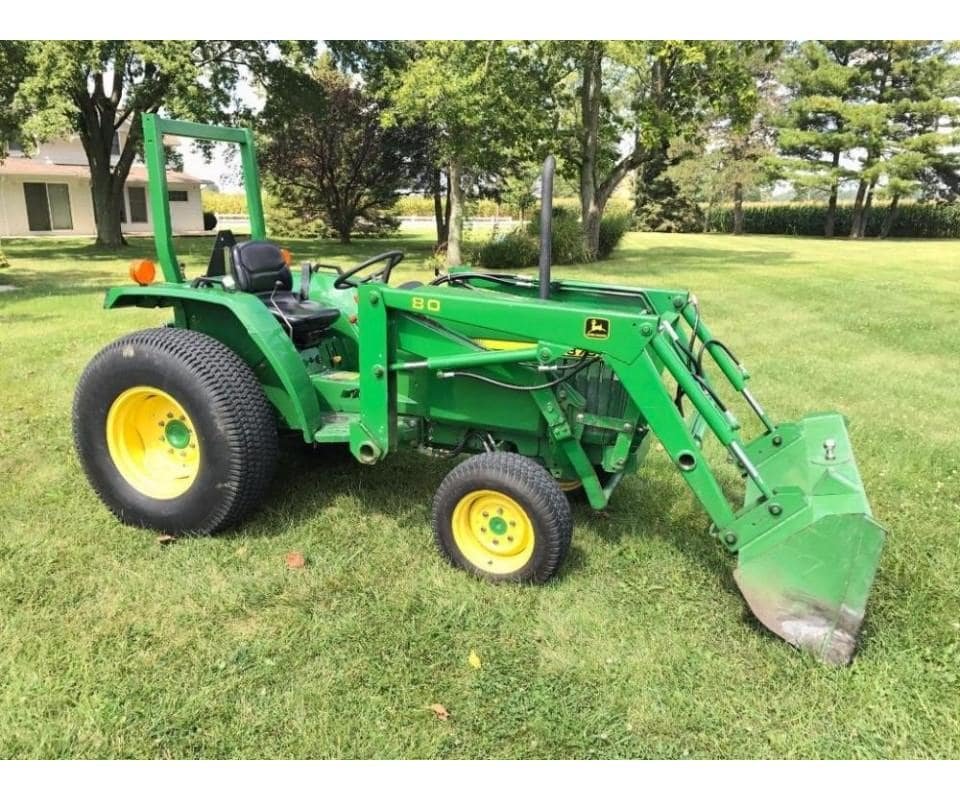
John Deere Lawn Tractor Repair in Ottawa: What S100, S200, and X-Series Owners Should Know
John Deere lawn tractors are among the most commonly owned riding mowers across Ottawa and the Ottawa Valley, from the entry-level S100 to the premium X300, X500, and X700 series machines. The brand carries a strong reputation for durability, and Ottawa homeowners who maintain their machines properly regularly get ten or more seasons of reliable service from them.
That said, John Deere lawn tractors have specific characteristics that affect how they should be serviced, what problems are most likely to develop, and how the repair-or-replace calculation differs between series. Knowing your machine — and what it needs — is the first step to keeping it running well through Ottawa’s demanding seasonal cycle.
Already know your John Deere needs attention? Call 613-899-4809 or book a pick-up. Most repairs turn around within 24 to 48 hours.
Understanding the John Deere Lineup: Which Series Do You Have?
Before getting into specific problems and repairs, it helps to know which tier your machine sits in, because the design priorities, engine options, and failure modes differ meaningfully across the range.
S100 Series (entry-level): The S100 through S140 models are designed for smaller properties and first-time tractor buyers. They use single-cylinder or V-twin Briggs & Stratton engines, 13-gauge steel mower decks, and the lighter TLT200 or K46 hydrostatic transaxle depending on the model. They retail from approximately $2,399 to $3,599 CAD. These are capable machines for small to medium flat lawns but are not designed for large properties, significant slopes, or heavy attachment use.
S200 Series (mid-range): The S220 and S240 models step up to V-twin engines, the Accel Deep mower deck designed for higher-quality cuts at speed. The heavier K46 hydrostatic transmission in the S240 makes it meaningfully more robust than the S100 tier for sustained use.
X300, X500, and X700 Series (premium): These machines are built for larger properties, more demanding terrain, and heavier use. They use higher-spec engines, cast-iron front axles, and more durable deck and drivetrain components. X700 series models are available with four-wheel drive and diesel engines. These are the John Deere machines most worth investing in significant repair work, given their build quality and replacement cost.
Understanding which series you own matters because the repair calculus differs substantially. A significant engine repair on an older S100 requires a different conversation than the same repair on an X500.
The Most Common John Deere Lawn Tractor Problems in Ottawa
Fuel System Failures After Winter Storage
Ottawa’s mowing season ends in October or November, and most lawn tractors sit with old fuel in the tank until April or May — a storage window of five to seven months. This is long enough for ethanol-blended gasoline to fully degrade, leaving varnish deposits in the carburettor and fuel lines that cause starting failures, stalling under load, or surging behaviour at the start of the season.
The symptoms typically include:
- The engine cranks but does not fire on the first attempts of spring, despite a charged battery.
- The engine starts briefly then stalls after a few seconds, suggesting the carburettor is drawing on residual fuel from priming rather than sustained fuel delivery.
- The engine runs but surges rhythmically at idle, pointing to a partially blocked main jet.
Draining the old fuel and refilling with fresh gasoline resolves mild cases. If the problem persists after fresh fuel and a new spark plug, the carburettor needs to be cleaned or rebuilt. John Deere’s S100 series uses a relatively straightforward single-throat carburettor that is serviceable without specialist tools. The twin-cylinder models in the S200 and X-series use similar principles but may have additional fuel delivery components worth inspecting.
Hydrostatic Transmission Issues
The hydrostatic transmission is the most mechanically significant component on a John Deere lawn tractor, and it’s the one that generates the most concern among owners when it starts behaving unexpectedly.
Symptoms that indicate transmission attention is needed include:
- Sluggish response or hesitation when engaging forward or reverse, particularly when the tractor is cold, which is often a sign of low or degraded transmission fluid rather than internal mechanical failure.
- Slipping under load on inclines, where the tractor moves freely on flat ground but loses drive power when climbing a slope. Low fluid level, contaminated fluid, or a worn hydrostatic pump are the most common causes.
- Complete loss of drive in one direction, which typically points to a failing check valve or internal hydrostatic pump wear and warrants professional diagnosis before the problem progresses further.
An important point about S100 series tractors specifically: the lighter TLT200 transaxle used in some models is not designed for heavy or sustained use on slopes, large properties, or towing loads. Running these machines beyond their design limits accelerates wear on the transmission faster than on higher-spec models. If you have an S100 and regularly mow more than one acre or work on meaningful slopes, the transmission is worth inspecting as part of annual service.
Transmission fluid should be checked annually and changed according to the manufacturer’s schedule. Using the correct fluid specification matters — the wrong viscosity can cause the same sluggish or slipping symptoms as low fluid level.
Mower Deck Problems: Uneven Cuts and Vibration
The mower deck is where most owners first notice something is wrong, because the symptoms show up directly in cut quality. The most common deck-related issues on John Deere tractors include:
- Uneven cuts leaving strips or scalped patches, which can be caused by an unlevel deck, uneven tyre pressure across the four wheels, a bent or worn blade, or a deck belt that has stretched and is no longer maintaining consistent blade speed.
- Excessive vibration through the tractor during mowing, which typically points to a bent or unbalanced blade, a worn or cracked blade spindle bearing, or debris jammed around a spindle. Vibration should never be ignored — it accelerates wear on bearings, spindle housings, and the tractor’s frame.
- Deck belt slipping or breaking, particularly on machines with several seasons of use. Deck belts stretch over time and eventually lose the tension needed to drive the blades consistently, particularly under load in thick or wet grass. Blade and deck maintenance is the highest-return routine service on any lawn tractor. Sharp, balanced blades, a clean deck underside, and an annual belt inspection prevent most deck-related issues before they develop.
Electrical System and Safety Switch Faults
John Deere lawn tractors use a network of safety interlock switches that prevent the engine from starting or running under conditions the manufacturer considers unsafe — such as the operator leaving the seat, the PTO engaging while in gear, or the brake not being depressed during startup. These switches are essential safety features, but they are also a source of frustrating no-start conditions when they fail or lose contact.
Common electrical faults on John Deere lawn tractors include:
- The engine refusing to start despite a charged battery and fresh fuel, where the cause turns out to be a faulty seat safety switch, a failed PTO interlock, or a corroded connection in the interlock circuit. This is one of the most common misdiagnoses on these machines — owners assume fuel or ignition when the actual cause is a switch contact.
- Battery drain between uses, which may point to a faulty charging circuit, a parasitic draw from a damaged wire, or a battery that is no longer holding charge after several seasons.
- Starting motor engagement without the engine firing, where the starter spins but the engine doesn’t catch. This usually indicates a spark issue, either a fouled or failed spark plug, or a faulty ignition coil.
On all John Deere tractor models, the seat safety switch is worth checking early in any no-start diagnosis. Sitting firmly in the seat and ensuring the PTO is disengaged before cranking eliminates the most common interlock-related causes before anything else is inspected.
The Easy Change Oil System: What S100 Owners Need to Know
John Deere’s S100 series introduced an Easy Change 30-second oil system, where the entire oil filter and cartridge assembly is replaced as a single unit rather than draining the oil separately. The system is designed to make oil changes quick and clean for owners who find traditional oil changes inconvenient.
The important context for Ottawa owners is this: the Easy Change system is still a regular maintenance requirement, not an optional one. Some owners interpret the simplicity of the system as a signal that oil service is less critical than on other machines. It is not. Running an S100 through Ottawa’s long mowing season without performing the Easy Change service at the correct interval degrades the oil’s protective properties and accelerates engine wear in the same way that skipping a traditional oil change would.
Is a John Deere Lawn Tractor Worth Repairing?
For most John Deere tractors, yes — and often clearly so. The repair threshold calculation is straightforward when you consider replacement cost:
- A new John Deere S100 series tractor costs $2,399 to $3,599 CAD, putting the 50% repair threshold at $1,200 to $1,800.
- A new S200 series tractor costs more, and X-series machines range from $3,799 well into the $10,000 range depending on the model.
At those replacement costs, most common repairs — carburettor service, belt replacement, deck spindle work, transmission fluid service, safety switch replacement — are clearly worth completing on a machine that is otherwise in reasonable condition. Even more involved work like a hydrostatic pump rebuild on an X-series tractor can be cost-justified given replacement value.
The exception is significant engine failure or major hydrostatic transmission damage on an older, entry-level S100 that has already covered substantial hours. In that situation, an honest professional assessment of remaining engine life versus repair cost is the right starting point before committing to the work.
For the full repair-or-replace decision framework, see our post on whether it’s worth repairing your lawn mower.
John Deere Lawn Tractor Maintenance Schedule for Ottawa Conditions
| Task | John Deere Recommendation | Ottawa Recommendation |
|---|---|---|
| Engine oil / Easy Change service | Every 50 hours or annually | Every spring before first use |
| Spark plug replacement | Every season | Annually, match engine spec exactly |
| Air filter service | Every season or 25 hours | Every spring; replace if two or more seasons old |
| Mower deck belt inspection | As needed | Every spring before first cut |
| Blade sharpening and balance check | As needed | At minimum every spring |
| Transmission fluid check | Every 200 hours or annually | Every spring; change per manufacturer schedule |
| Spindle bearing lubrication | Every 25 hours | Every spring and mid-season on heavy-use machines |
| Safety switch function test | As needed | Before first start of the season |
| Battery condition check | As needed | Every spring; charge or replace if weak |
| Fuel stabiliser treatment | Before storage over 30 days | Every fall without exception |
How Legacy Small Engines Services John Deere Tractors
At Legacy Small Engines in Stittsville, we service John Deere lawn tractors regularly across the S100, S200, and X-series range. When a John Deere comes in, we run a proper diagnostic that includes the interlock system, fuel delivery, deck components, and transmission. Not just the standard tune-up items.
We stock common John Deere-compatible parts for deck belts, blades, spindle components, and fuel system parts, which keeps turnaround times short. All work comes with a clear upfront estimate before anything is started, and if a repair does not make sense relative to the tractor’s age and condition, we will tell you that too.
Pick-up and delivery is available across Stittsville, Kanata, Nepean, Richmond, and surrounding areas. *(Pricing may vary. Contact us for a free upfront estimate.)*
Frequently Asked Questions
How long should a John Deere lawn tractor last?
With proper annual maintenance, John Deere lawn tractors are typically rated for 500 to 1,500 hours of service life depending on the series and how hard the machine is used. At average residential use rates, that translates to roughly ten to fifteen years for a well-maintained machine. Higher-spec X-series tractors, with their more robust construction, commonly exceed those figures.
My John Deere won’t start but the battery is fine. What should I check?
The most common cause of a no-start on a John Deere tractor with a good battery is a safety interlock switch fault — most often the seat switch, the PTO interlock, or the brake interlock. Ensure you are sitting firmly in the seat, the PTO is fully disengaged, and the brake is depressed before cranking. If the tractor still does not start, a technician should test the interlock circuit before moving to fuel or ignition diagnostics.
What is the difference between the S100 and S200 series for repair purposes?
The S200 series uses a heavier hydrostatic transmission, the Accel Deep mower deck, and a V-twin engine across its range, which makes it more durable under sustained use than the S100. It also carries a longer warranty. From a repair standpoint, S200 machines are generally worth investing more in, both because their replacement cost is higher and because their components are more robust. S100 repairs are still worth doing in most cases, but the calculus shifts if the machine has covered significant hours or the transmission is the failing component.
How often should I change the transmission fluid on a John Deere lawn tractor?
The correct interval varies by model and transmission type — consult your operator’s manual for the specific recommendation. As a general practice for Ottawa conditions, checking the fluid level every spring and changing it on the manufacturer’s schedule prevents most of the slipping and sluggish response issues that develop from degraded fluid. Using the manufacturer-specified fluid type and viscosity is important, as the wrong fluid causes the same symptoms as low fluid.
Can I use my John Deere S100 on steep slopes?
The S100 series is designed for relatively flat terrain and light-duty residential use. Using it regularly on significant slopes accelerates wear on the lighter TLT200 hydrostatic transaxle, which is not designed for the sustained load of hillside mowing. If your property has meaningful slopes, the S200 series with its K46 transmission, or the X300 series, is a better-matched machine. Continuing to use an S100 on terrain beyond its design limits leads to premature transmission wear that is costly to address.
What does a John Deere deck vibration usually mean?
Vibration through the tractor during mowing most commonly points to a bent or unbalanced blade, a worn blade spindle bearing, or debris jammed around a spindle shaft. It should not be dismissed as normal — sustained vibration accelerates wear on spindle housings, pulleys, and the tractor frame. Stopping use and having the deck inspected before the next mow prevents a relatively inexpensive bearing or blade replacement from becoming a more involved repair.
Get Your John Deere Ready Before the First Cut
John Deere tractor service slots in spring fill up faster than most homeowners expect. Getting the machine in during March or early April means faster turnaround, and the tractor is ready when the grass needs it, not two weeks after.
Here’s how to book:
1. Schedule a pick-up. We offer flat-rate pick-up and delivery across Stittsville, Kanata, Nepean, Richmond, and surrounding areas. No truck or trailer required. Pick-up rates are listed on the pricing page.
2. Let us know the series and model. Telling us whether you have an S100, S200, or X-series machine when you book allows us to have the right parts on hand and prepare for the specific transmission and deck components in your tractor, reducing the chance of a parts delay.
3. Call or use the contact form. Reach us at 613-899-4809 or through the Legacy Small Engines contact page. Let us know what the tractor is doing and a convenient pick-up time.
Most John Deere tractor tune-ups and standard repairs turn around within 24 to 48 hours. During the May and June peak, allow a few additional days. We will give you an honest timeline when you book so you can plan the first mow accordingly.